Northwestern University
Loveboat, TaipeiNorthwestern University is the institution that gives Ever Wong a place in a seven-year medical education program and becomes the clearest emblem of the future her family expects her to pursue. Ever’s relationship to its offer changes from acceptance to refusal, but the school remains consequential long after that decision: it concentrates her parents’ hopes for security, her father’s thwarted medical ambition, and her own difficulty separating love from obligation.
Program and Offer
The offer is for a place in Northwestern University’s Honors Program in Medical Education at the Feinberg School of Medicine. The program letter describes a distinctive seven-year educational experience for students aspiring to medical careers, presenting medicine not merely as a future possibility but as a structured route into a profession.
On May 1, Ever completes an acceptance form, confirms that she has paid a $500 deposit, and signs her name. Her choice appears settled in the paperwork even while her private conflict remains unresolved. She tells Megan that medical school has been the path laid out for her since before she could walk, and that her parents have long associated it with fulfillment, respect, and stability. Dance, by contrast, is something they expect her to give up after high school when she enters what they call the real world.
A Family Future Attached to Medicine
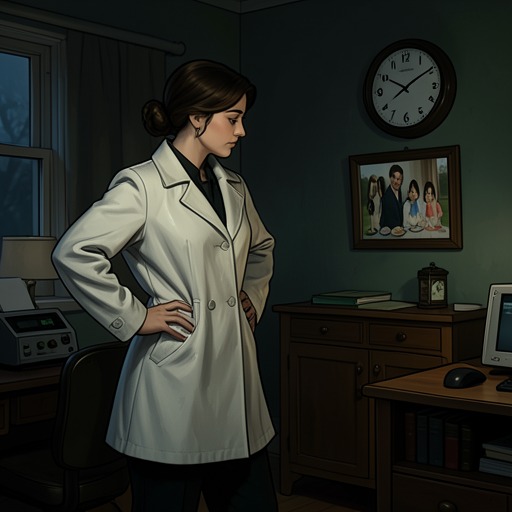
Northwestern’s offer acquires its force from the history of Ever’s family. Her father came to the United States with a medical degree from China, but the state licensing board would not recognize it without a residency he could not afford while supporting a wife and baby. Instead, he pushed an orderly cart at the Cleveland Clinic. Ever remembers him coming home defeated and smelling of antiseptic, telling her about surgeries he had glimpsed and lives doctors had saved. When she once gashed her knee in a bicycle fall, he stitched it and told her that, when she became a doctor, she would take care of such things herself. Ever grew up understanding that her career could make his abandoned ambition worthwhile.
Her mother makes the same history present in a different way. During the confrontation over Ever’s hidden artistic plans, she points to the work her husband accepted to put food on the table and to the dreams the family had been forced to surrender. Ever recognizes the sacrifices beneath that argument: her mother covered chores while she studied, cut her finger preparing nourishing food during finals, and worried over her medical applications; her father drove her to a clinic internship. The black pearl necklace that her mother polishes on her own father’s death anniversary becomes part of this network of remembered giving. Ever learns that her mother even sold the necklace to send her to Taiwan, turning a family keepsake into support for the daughter’s education and cultural experience.
These sacrifices do not make Ever’s decision simple. She knows her parents want the best for her, and she understands why medicine represents security to them. At the same time, she experiences the eldest child’s expectation as a debt to repay for two lives. Northwestern therefore stands for more than a prestigious opportunity: it is where affection, immigrant hardship, economic security, and the pressure to inherit a parent’s unrealized future converge.
The Offer Challenged and Declined
Ever’s parents discover the acceptance letter after a woman calls to ask whether she will accept Northwestern’s offer. Her mother searches Ever’s room, finds the letter, and confronts her. Ever insists that she worked hard on her applications and interviews, but her parents have already interpreted her limited medical-school acceptances as evidence against her; her mother asks whether this is why she got into only one school. The discovery turns an unspoken conflict into an immediate family crisis.
When Ever learns that her parents have bought a ticket for her to go to Taiwan, she protests that she got into Northwestern and did everything they asked. Her mother answers that the trip is not a punishment, citing the program’s reputation and the ticket’s expense. Ever’s objections cannot undo the arrangements. The institution that had represented her expected next step becomes part of the argument over whether her parents have the right to determine what that step will be.
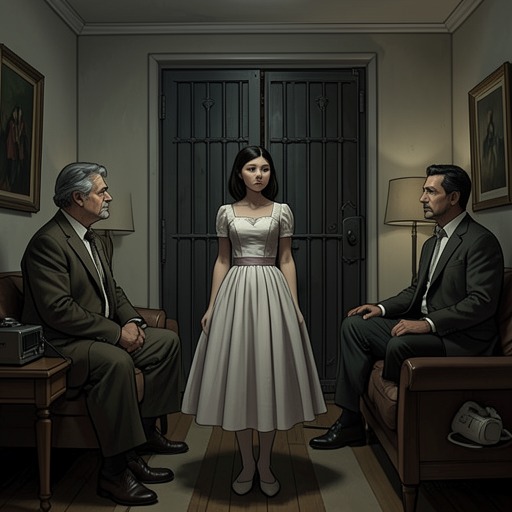
The pressure follows Ever to Taiwan. At a family gathering, when Aunty Claire asks about her plans for the next year, Ever means to tell her about Northwestern but instead announces that she is going to dance school. The answer exposes how far her spoken choices have moved from the medical future represented by the acceptance. Later, during a call arranged in The Dragon’s office at Chien Tan, her mother warns that Northwestern might find out about the scandal involving Ever’s photographs and could expel her, frightening Ever with the possibility that the school might decide her future even as she is struggling to decide it for herself.
Ever also invokes Northwestern when confronting Sophie over the photographs, warning her not to send them to the university and adding that Dartmouth could receive a letter too. The threat shows that the school remains an imagined audience and a potential judge of Ever’s conduct, not simply a destination she has already chosen. Her efforts to keep the photographs from reaching admissions offices register both the consequences she fears and the lingering authority of the professional identity her parents have attached to her.
Changing Meaning and Aftermath
Ever’s eventual departure from the medical path does not erase what Northwestern meant. Its offer is tied to the possibility of fulfilling her father’s dream, yet Ever eventually tells Rick that she does not have it in her to become a doctor and wonders whether she could become a dancer instead. She describes the choice as emotionally bound to her parents’ history: wanting dance feels like betraying people who have endured hardship and invested their hopes in her. The conflict is not a simple rejection of family or education, but a struggle to distinguish gratitude from a duty to live out another person’s unrealized career.
The pressure becomes visible again when Ever tells Xavier that her parents are trying to fly her home after having forced her to come to Taiwan in the first place. She has finally assembled a group of dancers and begun to feel at home, so returning would mean interrupting a life she has built for herself. Northwestern is not named in that exchange, but the medical future surrounding it remains part of the same family effort to redirect Ever away from dance.
By the end, the family’s relationship to risk begins to change. On August 24, while visiting on his way to Yale, Rick is present when Ever’s father announces that he plans to retire from the Cleveland Clinic and pursue his consulting business full-time. He admits the decision is risky and acknowledges its timing, since Ever is switching direction rather than going into medicine. Yet he has considered it for ten years, and Ever’s happiness has helped him recognize that the family cannot hide who they are. His announcement does not undo Ever’s earlier conflict or make Northwestern insignificant. Instead, it breaks the apparent one-way inheritance of sacrifice: the father who once made his daughter’s medical future carry the meaning of his own lost career now permits a different kind of future, while risking a change of his own.